Cymraeg CY

Welcome to the Celftastig Website


This is a website for practitioners and 11-14 year old learners, with the aim of providing tools and ideas based on activities to inspire the learners to develop the skills of exploring, creating and responding to art. The website is designed around 4 central themes, with an opportunity to look in more detail at the work of around 4 artists under each theme. The activities cover several themes and correspond to various areas of learning and experience in the Curriculum for Wales. These activities are tailored for progression steps 3 and 4 but can be adjusted according to the learner's ability and requirements. You do not need to complete all the activities or follow the order in which they are presented within the themes.

Themes and Artists

Environment

Mary Lloyd Jones, Manon Awst, Tim Pugh a Tim Davies

Identity

Catrin Williams, Lowri Davies a Tomos Sparnon

Culture

Ann Catrin Evans, Mari Thomas, Meinir Mathias a Ruth Jên

Politics

Ifor Davies, Iwan Bala, Neale Howells a Peter Finnemore

There are three sections for each artist.

In the 'Exploring' section, you will find information about the artists in the form of text, pictures, and sound - what inspires them, how exploring through experimentation creates different types of work, along with examples of their work, and the mood and ideas that are conveyed in them.

In the 'Response' section, you will find examples of resources and activities that can be used to develop the learners’ personal response skills to works of art. There is a particular focus on stimulating literacy skills by evaluating and explaining the impact of mood, emotion, and ideas.

In the 'Creating' section, you will find examples of plans and resources that could be used for projects, which experiment with different techniques to emulate the artists' styles. You can either download and print these resources or use them interactively on a device through the Hwb's pdf reader.

Explore and enjoy!
Lowri Davies

Pwy wyt ti?

Lowri Davies ydw i.

Ble cest ti dy fagu?

Ces i fy magu yn Aberystwyth.

Ble est ti i’r ysgol?

Es i i Ysgol Penweddig.

Disgrifia dy addysg.

Ar ôl gadael yr ysgol, astudiais i (I studied) Gelf (Celf = Art) yng Ngholeg Celf Caerfyrddin, Coleg Celf Caerdydd a Phrifysgol Staffordshire.

Pa ddefnyddiau wyt ti’n hoffi eu defnyddio?

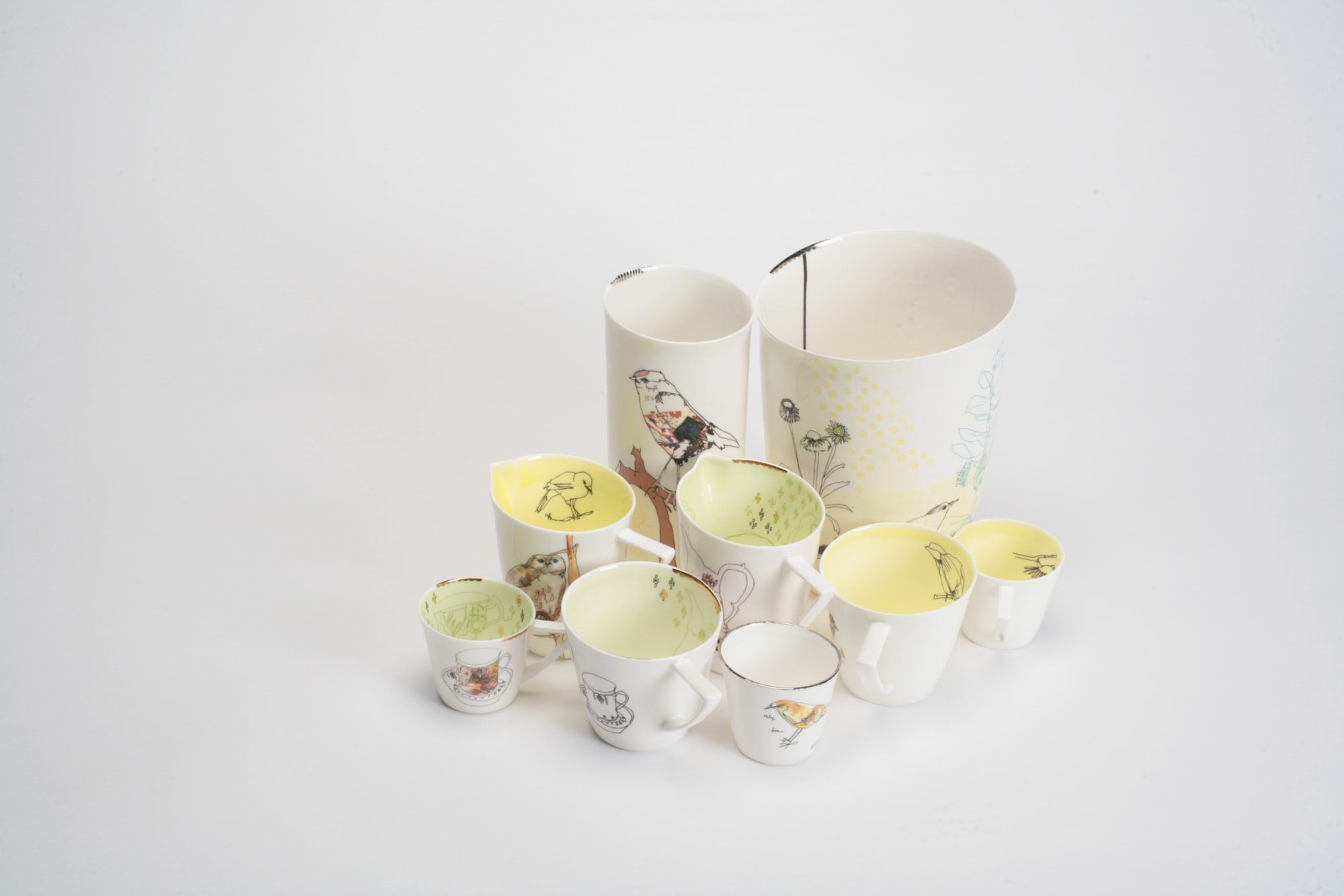
Artist Cerameg ydw i. Dw i'n defnyddio clai gwyn i wneud fy ngwaith - ‘bone china’ neu borslen (porslen - porcelain). Mae’r darluniau (illustrations) ar y gwaith yn bwysig. Dw i'n darlunio gyda paent dyfrliw (watercolour) ac inc.

Beth ydy dy ‘broses’ di?

Dw i’n defnyddio technegau diwydiannol (industrial techniques) ar raddfa fach (small scale).

Dw i'n gwneud mowldiau (moulds) o blastr (plastr = plaster).

Mae’r darnau (pieces) yn cael eu tanio rhwng 4-5 gwaith (times).

Wedyn, dw i’n ychwanegu (add) gwydredd (glaze) o wahanol liwiau.

Dw i hefyd yn ychwanegu’r darluniau (illustrations). Dw i'n gorffen y gwaith gyda lystarau (lustres) neu blatinwm (platinwm = platinum).

What is your background?

I am a Ceramics artist who studied a Foundation course at the College of Art in Carmarthen, a BA in Ceramics at Cardiff Art School and an MA in Ceramic Design at Staffordshire University.

I was born in 1978 and grew up in Aberystwyth. I now work on my own at FWCS Studio (Clay Fireworks Studio) in Glanyrafon, Cardiff.

What or who has influenced/inspired you the most?

My parents gave me drawing pens and a good set of watercolour paints when I was about 11 years old. My parents also took us to art galleries, so attending galleries was a very familiar experience for me.

I had a good teacher in Ysgol Penweddig called Mr Glyn Thomas who emphasized drawing. This has certainly given me a good foundation.

In terms of artists I admire, I enjoy the work of the artist Eric Ravilious (a war artist who also created murals and illustrated for Wedgwood) and Jaime Hayon (a Spanish designer).

Explain the process that you follow when creating a piece of art.

I'm a Ceramic artist, and the illustrations that decorate the work play an important role in the finished pieces. Most of the illustration work is created with ink and watercolour paint, but at times I will work on the illustrations digitally or use mixed media.

I tend to use high fired white clay to create my work - either bone china or porcelain. I use industrial techniques on a small scale, namely slip casting. This means having to start by creating moulds from plaster before casting with the clay itself. The pieces are fired between 4-5 times which is like the creation process in the industrial field. I add different coloured glazes; the drawings are transferred to transfer paper, and I finish the work with gold or platinum lustre. My master's degree in Staffordshire was very influential. The decision to study there was deliberate as I wanted to try to imitate the dishes that decorated my grandmother's home.

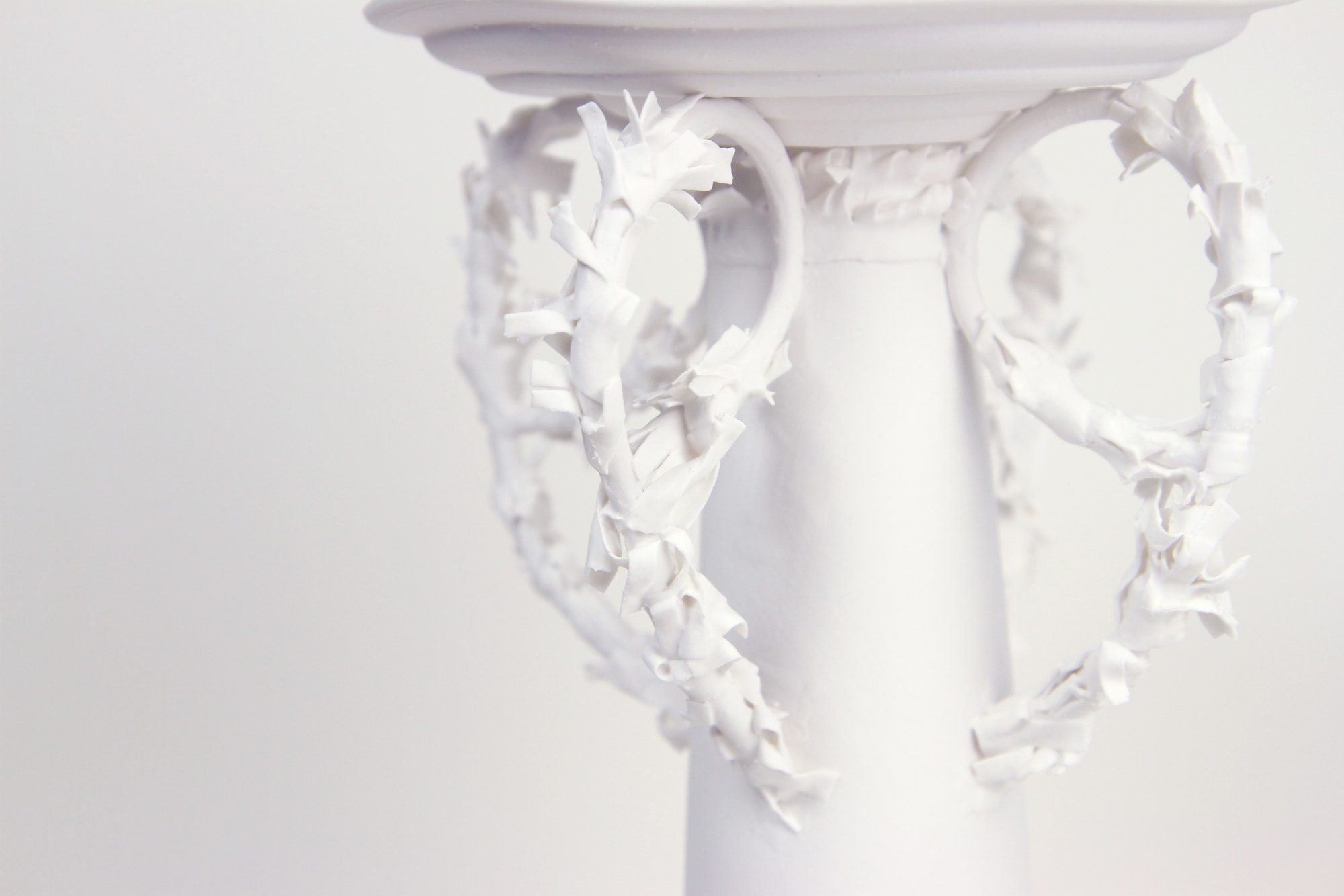
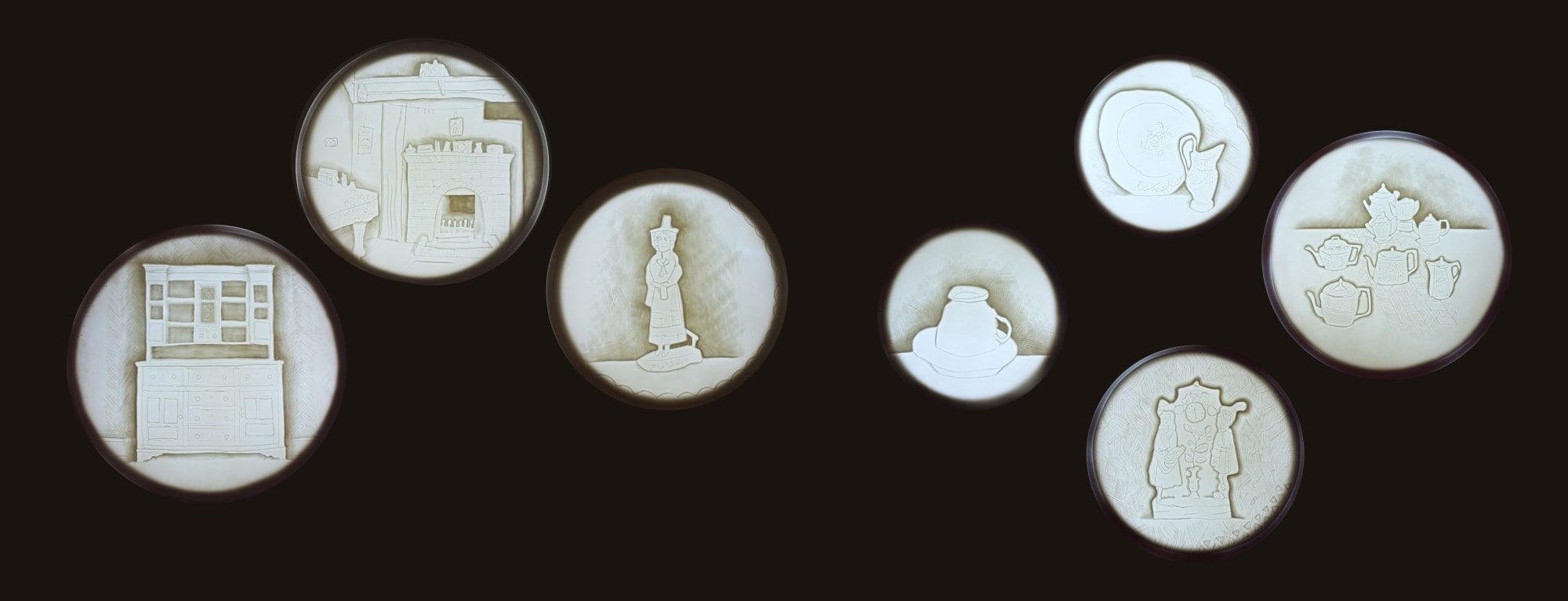
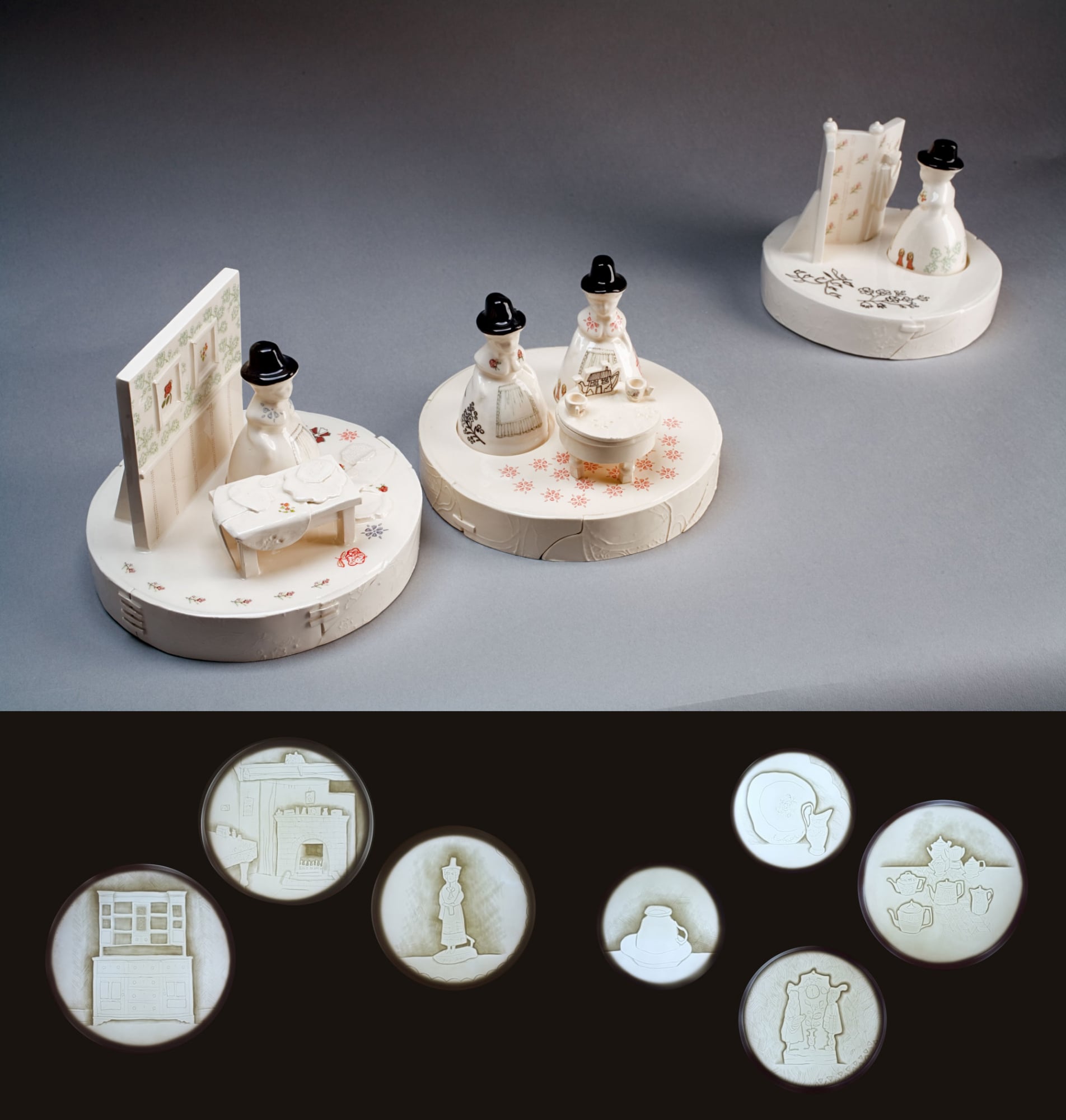
I have also experimented with light over the years, by creating candlesticks and lithophane panels (see the film); making wallpaper; illustrating books; creating an installation during a residency in Mexico; decorating a BT Box (see picture) and creating several trophies for various organisations.

Which media/materials do you enjoy using the most?

Without a doubt, drawing and painting with watercolour paints. I also enjoy that the rest of the work is quite technical, as there is a pattern to that type of work.

How has your work changed and developed over time? 

I see my work in three different periods and I now anticipate starting my fourth period.

The clay material, the colour palette and the themes of the illustrations have changed during these developments. I started by working with porcelain clay, documenting my grandmother's home with a more reddish and darker palette. Then I moved on to using white earthen clay responding more to collections in museums or the world around me. The third period began when I was studying for my MA where the clay, the themes of the work, the decoration and the colour palette changed. These collections were much lighter as I used colours such as pink, yellow, orange, and light blue. I was travelling back and forth from Aberystwyth to Stoke-on-Trent at the time, so I think the change in light between the two places affected this.

I'm about to start an experimental project to create unique, one-off works instead of creating a limited number of the same pieces. I will also set out to create a practical 'everyday' collection for the home, which is quite different to my experimental work. I predict that the nature of the colours will change once again.

Complete these activies. Your work will be marked as you go. Remember to take a screenshot of your answers to keep in your personal record.

Activity 1

Then, following the casting, the clay is fired on high either 'bone china' or porcelain.
On top of a glaze, I put drawings I did earlier, which have been transferred on to transfer paper.
The pieces are fired between 4-5 times which is like the creation process in the industrial field.
Next, I will cast the clay. White clay.
To finish the job, I will add gold or platinum lustre.
I will add different coloured glazes to the fired clay.
I will use slip casting which means that you must start by creating moulds from plaster before casting with the clay itself.

Activity 2

  • Welsh lady
    1
  • jug
    2
  • teapot
    3
  • dresser
    4
  • linen
    5
  • fireplace
    6
  • cup
    7

Activity 3

Can you match the Welsh and English words?

Ledi Gymreig
jwg
tebot
seld
lliain
cwpan
linen
teapot
jug
dresser
Welsh lady
cup

Remember to take a screenshot of your answers to keep in your personal record.

Vocabulary

murals - a work of art that is painted on a wall

illustrations - pictures

watercolour - a technique where the paints are mixed with water

mixed media - a mixture or combination of materials in a piece of art

porcelain - a ceramic made by firing kaolin (a fine white clay) to a high temperature - it creates fine, lightweight pottery

slip casting - a method used to make shapes by mixing a fine ceramic powder in water with chemicals to create a slip (a slip is fluid, but contains solid particles)

platinum - a white metal that is harder than gold and more rare and valuable

lustre - a thin layer of unoxidised metal that is used to create a bright glaze

imitate - to copy

lithophane - a work of art made by engraving on porcelain or plastic - you can see the picture best when it is lit from behind

installation - a large scale piece of 3D art that is often designed for a specific place

residency - a temporary period of time for an artist to work on a project or develop new ideas in a different location (sometimes abroad), which gives the artist an opportunity to work on a project or develop new ideas in a different location

documenting - keeping a record or evidence of something